
Recycling plastics in cars: Opportunities and Challenges of the EU End-of-Life Vehicles Regulation
Plastics in Cars: A Boon for Design, a Challenge for the EU End-of-Life Vehicles Directive
Plastics have been used in the automotive industry since the 1960s. While steel and aluminum remain important materials, plastics now account for an average of 15% of a vehicle’s total mass, which corresponds to approximately 150–200 kg per vehicle (Source: Plastics Europe). In particular, the weight reduction was made possible by the use of plastics such as polypropylene (PP). This material helps to lower fuel consumption and improve the environmental footprint.
With the EU End-of-Life Vehicles Regulation (ELV Directive), it becomes necessary to consider the efficient recycling of plastics in cars. The draft legislation targets various goals. However, the most significant change will be the increase in recycling rates to 15% for certain component groups and materials in a first step. Looking at the composition of a modern car, e.g., the VW ID.4, it is striking that steel dominates as a material with a share of 50–60% (and is still primarily used for the body), while plastic accounts for 10–20%. The proportions of plastics in the car, using the VW ID.4 as an example, are as follows (sources: VW):
- 63% thermoplastics
- 19% elastomers
- 9% thermosets
- 5% textiles
- 4% other Plastics
Why Plastics Remain a Sensible Material Alternative in Cars
The weight reduction mentioned at the outset, achieved by using lighter plastics, is crucial to the cost-effectiveness of vehicles. If one were to attempt to replace plastic components with aluminum or steel, the total weight of the vehicles would increase significantly—in extreme cases, by a factor of 1.5. Non-rigid elements would have to be replaced with leather, flax, or jute.
In addition to the burden of increased curb weight, important material functions would also be lost. Without a plastic layer, the windshield would lose its shatter-resistant properties. Headlights would have to be made of glass, which would lead to increased wear and tear and greater weight.
Modern automotive manufacturing is currently not feasible without plastics. They are not just a matter of weight, but also of safety, design freedom, and cost efficiency.
The Challenges of the EU ELV Directive
Since automotive manufacturing involves an interplay of highly complex and meticulously regulated processes, any external legal intervention can throw the industry off balance. For example, the restriction remains in place that only PCR materials (post-consumer recyclates) count toward the targeted quotas, while PIR (post-industrial recyclates), i.e., waste from production, are not recognized.
This approach could lead to a supply crisis, as the necessary PCR materials—particularly the engineering plastics used in vehicles—are scarce on the market and can only be separated by type at great expense. To further enhance sustainability in line with the closed-loop approach, an additional 20% recycled content is to come from end-of-life vehicles. Here, too, significant challenges arise, as programs such as the so-called scrappage incentive have severely limited the availability of end-of-life vehicles in the EU.
How can sustainability and economic viability be reconciled?
It remains to be seen whether the targets set by the EU ELV Directive can be achieved without compromising the cost-effectiveness and quality of vehicles. Innovative solutions are needed that both ensure the availability of PCR materials and enable the efficient recovery of materials from end-of-life vehicles.
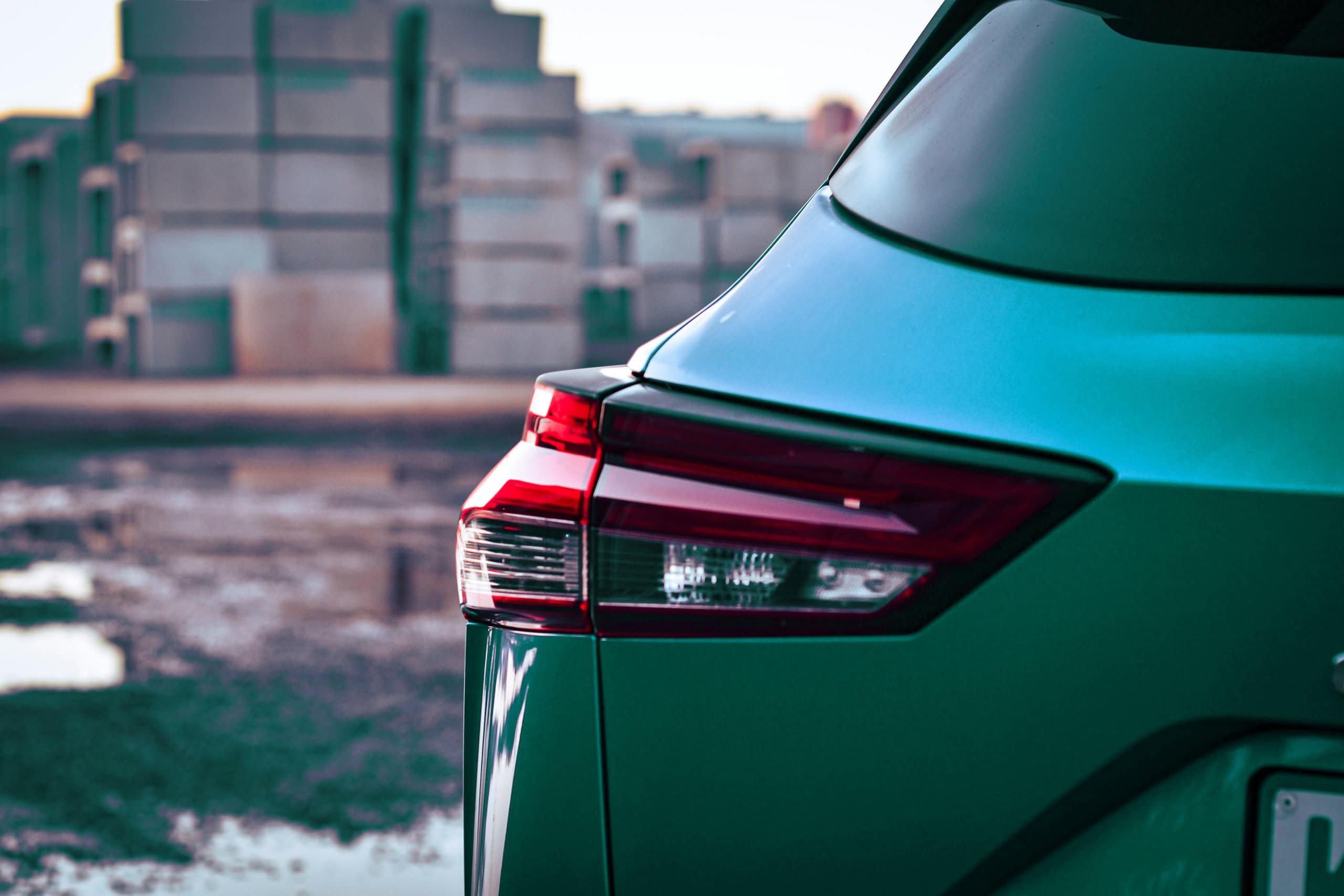
Rear lights are a clear example of plastic recycling in cars. They are typically made of PMMA (polymethyl methacrylate), a transparent plastic. PMMA casting compounds produced by extrusion or casting processes have very high viscosity, which normally makes them unsuitable for the standard injection molding process and thus for the manufacture of taillights.
Thanks to the innovative collaboration between Pekutherm Kunststoffe GmbH, Sitraplas GmbH, and Polytives GmbH, however, significant progress has been made in addressing this challenge: It is now possible to produce injection-moldable PMMA compounds from cast sheets without compromising the material’s valuable mechanical properties. This also enables the integration of recycled PMMA into taillights and opens up new opportunities for the circular economy.
The Future of Automotive Plastics
How will plastics in cars evolve in the coming years? Some trends can be predicted quite clearly:
- Due to the new legal framework, the recycling of plastics in cars will continue to advance.
- Research and development will focus on creating even lighter, more durable, and more sustainable plastics.
- The automotive industry will increasingly rely on circular economy concepts to return plastics to the production cycle after their useful life.
Thanks to TecPart e.V., we will continue to be kept closely informed about these and other important transformation processes in the industry. Closer cooperation between automakers, recycling companies, and policymakers is essential to address the challenges of the EU ELV Directive and ensure a sustainable future for the automotive industry.

Recent Comments