
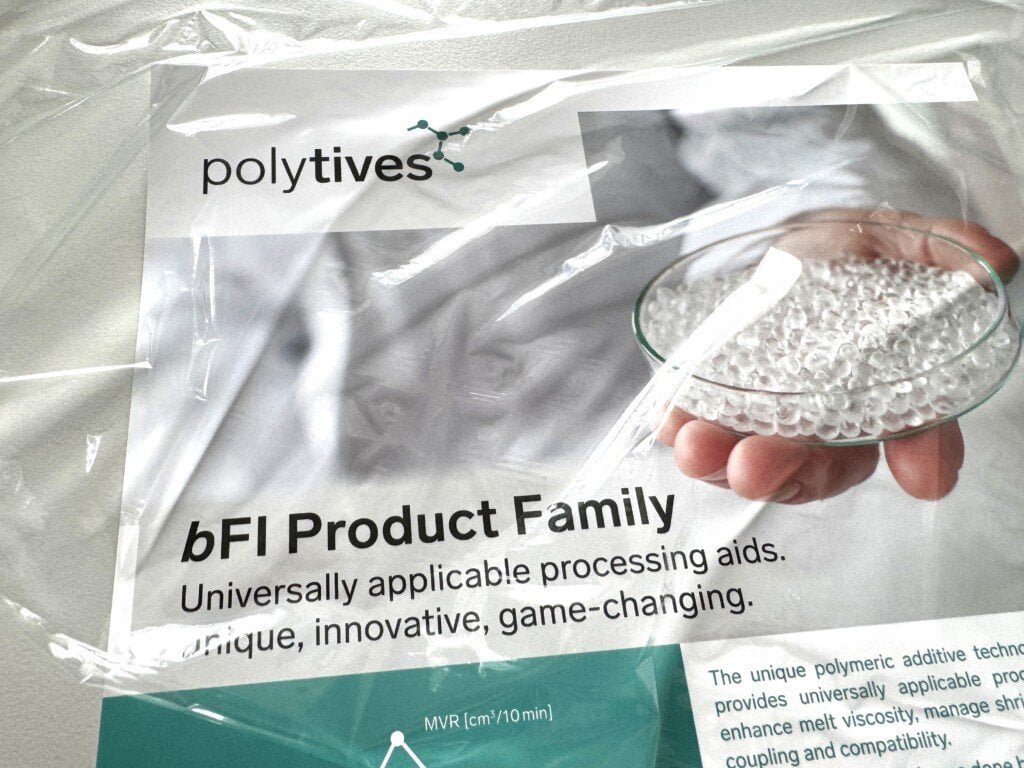
In plastics and film processing, per- and polyfluoroalkyl substances (PFAS) and silicones have long been part of the standard toolkit of process aids. A closer look at both substance groups shows why that’s starting to change.
Proven tools with well-known drawbacks
As so-called Polymer Processing Aids (PPA), PFAS improve melt flow behaviour, prevent melt fractures such as the notorious “sharkskin” effect, and stabilise the extrusion process, for example in PE film production. Silicones, or siloxanes, are mainly used in injection molding as release agents. They allow for gentle demolding of complex geometries, shorter cycle times, and less wear on the tool.
All well established. The problem lies elsewhere.
Why both substances are increasingly viewed critically
PFAS are known for their extreme persistence, which is why they’re often referred to as “forever chemicals.” They accumulate in the environment and are suspected of being harmful to health.
For silicones goes nearly the same: degradation under certain conditions occurs so slowly that these substances could just as well be filed under the category of “forever chemicals”.
In injection molding, there’s an added complication: silicones migrate to the surface of the component and form a lubricating layer that’s difficult to remove. That’s a real obstacle for later process steps such as painting or coating, since it reduces adhesion. On top of that, mechanical machine parts can become permanently contaminated by penetrating silicone. It’s little wonder, then, that silicone-containing plastics are increasingly avoided in injection molding.
What’s notable is that both substances are usually added in only small amounts, typically 0.1 – 1 wt%. That, however, doesn’t change the risks described above.
So what’s the alternative?
Polytives’ additives show that there’s another way: they reduce sharkskin effects and improve flow properties in PE films at dosages as low as 0.5 wt%.
Would you like to learn more or try the product for yourself? Get in touch with us.
Recent Comments