Trends in plastics processing

trends in plastics processing

Trends in Plastics Processing: How Polymeric Additives from Polytives Open New Possibilities

The trends in plastics processing are shifting faster than ever. Energy and resource efficiency, and economic stability are becoming essential for companies navigating competitive markets and increasingly strict regulations. At the same time, material fluctuations and cost pressures create challenges for processors who aim to integrate recyclates, biobased compounds, and efficient production workflows.

This is where polymeric additives from Polytives come into play. They provide a technological solution that stabilizes processes, improves efficiency, and conserves resources—without compromising the mechanical properties of the base polymer.

Between Goals and Reality: Challenges in Modern Plastics Processing

The plastics industry faces multiple simultaneous pressures:

  • rising energy costs
  • stricter regulations
  • increased global competition
  • demand for more sustainable materials such as recyclates and biobased compounds

In practice, however, fluctuating raw material quality, narrow processing windows, and additional material costs make sustainable transformation difficult. Many companies find themselves caught between ambitious goals and economic constraints.

A Versatile Tool: Polymeric Additives That Match the Trends in Plastics Processing

Polytives’ polymeric additives stand out from conventional additive approaches. Since they are polymers themselves, they preserve the mechanical properties of the host material. They are also:

  • compatible with a wide range of virgin and recycled plastics
  • migration-stable and compatible with regulations 
  • suitable for diverse applications and processes

This combination of technical effectiveness and regulatory clarity aligns seamlessly with current trends in plastics processing: producing more sustainably, safely, and economically while maintaining high material quality.

Simplifying Processes and Reducing Costs

The core effect of Polytives additives is the significant reduction in melt viscosity. As a result:

  • materials process more easily
  • pressure and temperature requirements drop
  • machine utilization improves
  • cycle times decrease
  • equipment experiences less stress

For processors, this means:

  • lower energy consumption
  • reduced downtime
  • greater flexibility in machine selection
  • direct cost savings
  • an improved CO₂ footprint

These advantages directly reflect some of the most important trends in plastics processing today.

More Design Freedom Without Losing Material Performance

Lower processing temperatures expand the processing window considerably. This allows manufacturers to:

  • gently incorporate temperature-sensitive additives
  • process natural fibers and other biobased components more reliably
  • use higher filler contents
  • explore more flexible formulation and product designs

The result: improved design freedom and greater material versatility—key factors for sustainable innovation in plastics manufacturing.

A Closer Look at Recyclates: Additives as Enablers

Increasing the share of recyclates is one of the major trends in plastics processing—but also one of the most challenging. Variations in material quality and limited processability often hinder implementation.

Polymeric additives can help overcome these barriers by:

  • stabilizing processing conditions
  • compensating for raw material fluctuations
  • enabling higher recyclate content
  • improving overall material behavior—sometimes making processing possible in the first place

A recent example:
With rPET, in cooperation with Brac-Werke AG, polymeric additives improved processability significantly—even without perfect material purity—helping companies integrate more recycled content into their products.

Polymeric Additives as Pioneers for Future Materials

Polytives sees polymeric additives as a platform technology, not a short-term fix. They can be customized for a variety of materials and manufacturing processes, offering:

  • higher production flexibility
  • reduced dependence on fluctuating raw material quality
  • stable mechanical performance under demanding conditions
  • long-term viability for sustainable product development

Within the TecPart e.V. network and through cooperation across the industry, Polytives is actively driving innovation toward more efficient and sustainable plastics processing.

Polytives’ commercially available processing aids have already proven their capabilities in numerous projects—and are ready to support future developments as companies move toward smarter, greener, and more adaptable manufacturing.

FLYER USE CASE

rPET

How can the processing of rPET be optimized from a process engineering perspective?

Processing recycled PET (rPET)

rPET in Focus: Sustainability Meets Technical Limitations

Recycled PET – or rPET – is gaining increasing importance in the plastics industry. Legislative initiatives such as the EU Plastics Strategy and mandatory recycling quotas for packaging are driving its use.
However, the processing of rPET still poses challenges for many manufacturers: even with optimal injection molding parameters, issues like incomplete mold filling, flash formation, or high energy consumption can occur.

A recent industrial case demonstrates how these challenges can be overcome — without longer cycle times or reduced product quality.

The Challenge: Incomplete Mold Filling Despite Optimal Machine Settings

When producing a prototype component made from rPET, Brac-Werke encountered a typical issue: despite optimized temperature and pressure settings, the part could not be completely molded.
Common countermeasures, such as increasing pressure, did enable full mold filling — but also caused flash formation at the gate, leading to costly rework.

Raising the temperature and pressure simultaneously resulted in higher energy consumption, longer cycle times, and accelerated material degradation — all detrimental to process efficiency and sustainability.

The Solution: Polytives bFI A 3745 Additive Enhances rPET Flow Properties

In cooperation with the chemical distributor Nordmann, Brac-Werke implemented a polymeric additive solution: bFI A 3745 from Polytives.
Even a small dosage of 3–5% proved sufficient to significantly enhance the rheological properties of the rPET melt.

Key effects at a glance:

  • Reduced viscosity of the rPET melt

  • Improved flowability and complete mold filling

  • More uniform material compaction

  • Approximately 25% lower injection pressure

  • Reduced energy consumption and machine wear

“The Polytives additive exceeded our expectations — without any compromise in quality or cycle time,”
says Markus Hofer, Managing Director of Brac-Werke.

Process Engineering Optimization for Greater Efficiency and Sustainability

The targeted use of the additive resulted in a more stable, economical, and environmentally friendly production process.
The mechanical performance of the final component remained unchanged, while process stability increased noticeably.

According to Viktoria Rothleitner, Managing Director at Polytives:

“Our additives make it possible to process demanding materials like rPET economically and reliably — a key lever for greater sustainability in the plastics industry.”

Conclusion: Efficient rPET Processing Through Targeted Additive Solutions

This case clearly illustrates how the processing of rPET can be optimized from a process engineering perspective:
By using the right polymeric additives, manufacturers can improve melt flowability, lower energy consumption, and increase process reliability — all without sacrificing quality or profitability.

As a result, rPET becomes a technically and economically viable alternative to virgin polymers such as ABS, opening new opportunities for sustainable component design in the plastics sector.

Source: Polytives – Application Report, Kunststoff Magazin, July/August 2025
www.polytives.com

FLYER USE CASE

rPET

FAQ — How can the processing of rPET be optimized from a process engineering perspective?

1. What is “process engineering optimization” for rPET?
It means adjusting material formulation (e.g., additives), machine settings (temperature, pressure) and mold design to improve throughput, part quality and energy efficiency.

2. How can rPET flowability be improved?
By using targeted additives (polymeric flow enhancers), optimizing melt temperature and shear. Small dosages (3–5%) of suitable additives often yield major improvements.

3. Why is reduced viscosity important?
Lower melt viscosity reduces required injection pressure, improves mold filling, and lowers energy consumption and tool wear — without sacrificing part performance if the additive is chosen correctly.

4. What are the benefits of lower injection pressure?
Lower pressure reduces energy use, machine and tool wear, part warpage and rework from flash — improving production economics.

5. Do additives affect mechanical properties?
If selected and dosed correctly, additives typically do not degrade mechanical properties, but validation (tensile, impact, rheology tests) is recommended.

6. How does optimization improve energy efficiency in plastics processing?
Measures such as reduced injection pressure, shorter cycle times and less rework lower the total energy per part and improve the product’s carbon footprint.

7. What does “uniform compaction” mean?
It refers to a consistent material density across the part without voids or weak spots — achieved through good flow distribution and appropriate holding pressure control.

8. Can rPET replace virgin polymers like ABS?
Yes — with process optimization (additives, parameter tuning) rPET can be a viable substitute in many applications, provided part requirements are met.

9. What first steps should manufacturers take to work with rPET?
Perform material characterization (MFI, moisture), run pilot tests with/without additives, adapt mold and process settings, and conduct mechanical testing and LCA considerations.

Xenon test plastics: Sun, rain, heat – plastics face tough conditions in everyday use

Whether used as housings, lighting elements, protective covers or outdoor furniture – plastics exposed to the elements or intense light must withstand a lot. But how can we tell how well a plastic ages? And how can that be evaluated without waiting for years?

This is exactly where the xenon test comes in: A proven laboratory method that simulates artificial weathering caused by sunlight, heat and humidity. Within just a few weeks, it provides insights that would take years to gather through natural exposure.

What actually happens during a xenon test?

In essence, a material – such as a plastic specimen – is placed into a test chamber equipped with a xenon arc lamp that mimics natural sunlight. The sample is also exposed to defined levels of heat and moisture. It may sound simple, but the combination is highly effective: typical weathering conditions can be simulated in a controlled and accelerated manner.

The goal is to observe how colors, surfaces or mechanical properties change. Does the material become brittle? Does it yellow? Do cracks form? This enables the comparison and optimization of materials, without long-term outdoor testing.

Why is this particularly relevant for PMMA?

A prime example for the use of xenon testing is PMMA (polymethyl methacrylate) – widely known as acrylic glass. It’s crystal clear, lightweight and highly versatile but also sensitive to UV radiation. If PMMA becomes brittle or discolored, both its appearance and functionality may be compromised.

With xenon testing, different formulations or additives can be tested specifically: Which one provides better protection? How long does the material remain optically and mechanically stable? Especially for transparent or colored applications, assessing long-term weatherability is crucial.

What standards apply?

To ensure that xenon tests deliver meaningful and comparable results, they must follow standardized protocols, such as:

  • ISO 4892-2 – for plastics

  • DIN EN ISO 16474-2 – for coated surfaces

  • ASTM G155 – commonly used in North America

These standards define parameters such as light intensity, chamber temperature, exposure duration and humidity cycles.

Why is it worth the effort?

Because it pays off. Testing early in the development process helps manufacturers understand how their products will perform under real-world conditions and enables targeted improvements. For outdoor applications, architectural elements, automotive components or long-lasting consumer goods, this can make a decisive difference.

Conclusion

The xenon test for plastics offers a glimpse into the future: it shows how materials age under realistic conditions and what can be done to improve their durability.

At Polytives, we are incorporating xenon testing into our own material evaluation processes. We’re excited about the insights it will bring – stay tuned!

Focus on sustainability – a brief interview

Focus on sustainability

Oliver, as QMB and as the person in charge of sustainability at Polytives: You have been dedicated to the topic since 2022, so you could say that you lay focus on sustainability. But you’re not obliged to produce a report, are you?

Due to the size of our company, we are still exempt from the reporting obligation. However, we are not primarily addressing the issue due to legal expectations, but because the topic of sustainability is important to us personally on the one hand and is also part of our long-term corporate strategy on the other. For us, sustainability is considered throughout company scaling and product development and is an intrinsic part of how we identify topics and potential.

It was important for us to establish this procedure as early as possible in order to then gradually approach the day-to-day circumstances and the legal framework. For the latter area in particular, a quick start made sense to get a feeling for which data and key figures could be collected. The effort involved in starting from scratch naturally increases as soon as a company is larger at a later stage.

That sounds understandable. Have there also been any external inquiries, although you are not obliged to report?

There certainly were. Being exempt from the reporting obligation does not mean leaving the topic completely unaddressed. Larger companies pass on inquiries within their supply chain and even in the run-up to a prospective collaboration, the players are increasingly focusing on sustainability.

As we are already somewhat active in this field, we can therefore react quickly and purposefully and provide appropriate answers. I think we can definitely say that our customer-centric way of working also creates small competitive advantages for our customers and for us.

If you have been reporting since 2022: What has changed over this period, what have you learned and what is your conclusion?

It was clear to us from the outset that our first report would not be “textbook”. Rather, it was a stocktaking exercise and showed what was possible in a short space of time and with little effort. We were still missing too many data points for in-depth reporting and the dimensions of sustainability had not yet been explored in depth. With the next report, we then knew where we needed to start with improvements and had also found new ways to close gaps. We are still mainly focusing on the ecological and economic aspects of sustainability, as our work and our products can have a significant impact here. For example, in 2023 we had already dealt with carbon accounting for the first time, which is an indispensable part of the report.

Our goal will ultimately be a report that meets a fully-fledged standard in terms of content – there is still a lot to do before then, but the methodology of small improvement steps will also lead us there. For example, we are currently using the VSME model as a guide.

It is generally advisable to start early in all areas, but not too ambitiously, and to grow organically. For example, consulting, networking and general information events have helped us to develop the right speed.

High-quality recycled PP: More potential through optimized flow properties

Versatile Applications

Unlocking the potential of high-quality rPP through additives

High-quality recycled polypropylene (rPP) plays a crucial role in a functioning circular economy. As an alternative resource, it helps reduce the consumption of fossil-based raw materials and minimizes environmental impact. However, companies often face the challenge that high-quality rPP exhibits variations in material properties compared to virgin PP. This is particularly evident in flow properties, which are critical for efficient processing.

By leveraging polymer-based additives, these fluctuations can be effectively compensated. This allows for targeted optimization of high-quality recycled PP, enhancing processability while supporting sustainable manufacturing processes and product designs.

Why Are Flow Properties and Cycle Times Critical for High-Quality rPP?

One of the key differences between high-quality recycled PP and virgin material lies in the melt flow rate (MFR). While virgin PP offers consistent viscosity, recycled PP can vary significantly depending on its source and recycling process. This variability presents challenges in injection molding and other industrial applications.

By improving the flow properties through the use of additives, manufacturers can not only enhance process stability but also reduce cycle times in injection molding. Faster processing leads to more efficient production with lower energy consumption – both can yield to a better CO₂ balance.

The Advantages of Optimized Flow Properties in rPP

Reduced Energy Consumption and Resource Efficiency

Optimized flow properties enable shorter cycle times in injection molding, leading to reduced energy consumption and a lower carbon footprint.

Enhanced Processability

Greater process stability ensures consistent and reliable results in polymer processing. High-quality recycled PP can be more easily integrated into existing manufacturing workflows.

Expanded Application Scope

Improved material characteristics allow for the use of high-quality recycled PP in demanding industries. Applications in the automotive sector and for technical components are becoming increasingly viable.

Lower Scrap Rates, Increased Sustainability

Stable flow properties help reduce production scrap. A consistent material flow ensures uniform product quality, enabling a higher proportion of recycled PP in finished goods.

Contribution to the Circular Economy

High-quality recycled PP helps reduce reliance on virgin plastics. Sustainable production methods, combined with optimized cycle times and energy-efficient processing, support companies in achieving their environmental goals. Additionally, reduced thermal stress and shorter processing times preserve material integrity, ensuring better quality for subsequent recycling cycles.

Conclusion: Additives Enhance the Competitiveness of High-Quality Recycled PP

To increase the share of high-quality recycled PP in industrial applications, technological innovations are essential. Additives improve melt flow properties, shorten cycle times in injection molding, and ensure consistent, high-quality output. This makes high-quality recycled PP an economically attractive alternative to virgin plastics.

5 Years Polytives GmbH

AI-generated picture

5 Years Polytives GmbH: How it all started, where we are now, and what’s next?

The Beginning: When Polytives Was Still “Hyperflow”

When chemist Oliver Eckardt and Prof. Felix H. Schacher decided in 2014 to shape the topic of Oliver’s dissertation and commenced their research, neither of them anticipated that this would ultimately lay the foundation for the establishment of Polytives.

Originally initiated as a ZIM project at Friedrich-Schiller-University in Jena, it soon became clear that their developed technology had immense potential — too much to not at least attempt to bring it to market maturity. Thus began their journey, initially supported by an EXIST research transfer grant, ultimately leading to the founding of the company.

After foundational research and a research stay in Belgium by Oliver Eckardt, Viktoria Rothleitner joined the team in 2017. With her Bachelor’s degree in Natural Sciences and currently studying for her Master’s in “Business Administration for Scientists,” she added essential business expertise. Together, in July 2017, the three founders successfully applied for EXIST funding, which kicked off the project in March 2018—initially still under the name “Hyperflow.”

Two years later, again in March, the official founding took place with the company’s registration in the commercial registry. During these two years, the team built a solid network, demonstrated proof-of-concept, established a scalable synthesis method, and further expanded the team. And although March 2020 also marked the start of something completely different, the team quickly adapted, successfully advancing their goals digitally and remotely.


The Journey Begins: From Project to Acceleration

The originally four-person team, with co-founder and scientific advisor Prof. Schacher remaining an integral part, not only relocated multiple times in the following years but also reached a series of significant milestones. These included continuous technological advancements, company growth, diversification of expertise within the team, multiple funding rounds, and prestigious awards — all leading up to the move into the future production facility in 2024.

Beyond these milestones, Polytives has showcased its technology at various trade fairs, including live demonstrations in Friedrichshafen, carried out extensive sample testing, and successfully scaled up production to an industrial level. Numerous strategic partnerships have also been established, including collaborations with institutions such as TITK e.V., as well as renowned distributors and mid-sized companies. Together, these partnerships drive continuous optimization and the implementation of projects that provide customers with an ever-expanding range of benefits.


What Lies Ahead?

While 5 years of Polytives GmbH signify a dynamic history filled with achieved milestones, these 5 years are truly just the beginning for the team. Plans are underway to establish in-house production facilities, complementing existing contract manufacturing partners and further accelerating product development to create even greater value for customers. Because that’s what drives Polytives: a unique platform technology capable of providing innovative solutions to numerous global challenges in the plastics industry.

And since space in a blog post is limited, we’ll just say for now: to be continued! 😉

Processing and Material Properties of Biopolymers, Especially Polyhydroxyalkanoates (PHA): Research Project Successfully Completed

How polymer additives can improve the processing of PMMA

Polytives GmbH, together with the Thuringian Institute for Textile and Plastics Research (TITK), has successfully completed a significant research project. As part of the Thuringian technology competition “get started 2gether”, both partners worked on specifically improving the processing and material properties of biopolymers—particularly polyhydroxyalkanoates (PHA)—through innovative polymer additives.

This is already the second project of this kind that Polytives has successfully realized in cooperation with TITK— a strong sign of the innovative strength and research capabilities of the Thuringia region.

Why the Processing and Material Properties of Biopolymers (PHA) Are Crucial

Polyhydroxyalkanoates (PHA) are among the most promising biopolymers for sustainable plastic production. They are made from renewable raw materials, are biodegradable, and belong to the group of thermoplastics. However, they currently have a decisive disadvantage: their brittleness and low thermal stability make efficient industrial processing difficult.

To establish PHA as a sustainable alternative to conventional plastics, their processing and material properties must therefore be significantly improved.

Innovative Research Project by Polytives and TITK with the Goal of Optimizing PHA Processing

The research project had a clear goal: to broaden the processing possibilities of PHA and make them more attractive for industrial applications. To achieve this, various types of PHA were compounded and extensively tested with Polytives’ processing aid bFI A 3745.

The central question was: How can the processing and material properties of biopolymers—particularly polyhydroxyalkanoates (PHA)—be sustainably improved through innovative additives?

Measurable Improvements Through Innovative Polymer Additives

TITK’s investigations show impressive results:

  • Even a small amount of the additive bFI A 3745 significantly improves flowability.
  • The melt flow rate (MFR) could be increased by up to 30 percent.
  • A broadened temperature window substantially facilitates the processing of bioplastics.

The use of the additive thus opens new possibilities in industrial production and elevates PHA to a new performance level.

New Application Areas and Market Potential for PHA

Thanks to the improved processing properties, completely new application and market opportunities are emerging for PHA. In the field of sustainable materials especially, they can play a much greater role in the future—actively contributing to the ecological transformation of the plastics industry.

Statements from the Project Partners

Oliver Eckardt, Managing Director of Polytives GmbH, emphasizes:
“Our cooperation with TITK is an excellent example of collaborative research and development in Thuringia. Together, we have made important progress in making biopolymers like PHA more attractive for industrial applications, thereby advancing sustainable innovation originating from our region.”

Benjamin Redlingshöfer, Executive Director of TITK, adds:
“This successful project once again shows how the ‘get started 2gether’ competition acts as a real accelerator for start-ups. With Polytives, we were able for the second time to support the transfer of innovative ideas all the way to industrial market readiness.”

Conclusion: A Milestone in the Advancement of Sustainable Biopolymers

The research project makes a significant contribution to improving the processing and material properties of biopolymers, especially polyhydroxyalkanoates (PHA). The results demonstrate the potential inherent in combining practical, application-oriented research with innovative material development—and how PHA can become a high-performance, sustainable plastic of the future.

FLYER USE CASE

PHA

Product Family bFI in Action

AI-generated picture

From time to time, we share insights into the advantages our customers and partners gain from using additives from the bFI product family. These findings are based on applications and trials, often sparking ideas for additional use cases where, for instance, the bFI A 3745 provides the necessary solution.

Wide Range of Application Opportunities

Originally developed on an acrylate basis, the flow enhancers of the bFI product family were initially intended for use primarily in acrylic glass, polycarbonate, and polystyrene. However, as described elsewhere, the compatibility of these polymeric additives extends well beyond this scope. They can be applied across all common plastic variants, including both thermoplastics and thermosets, effectively addressing a wide range of viscosity challenges.

In addition to our research findings, validated in collaboration with partners, positive feedback from customers and documented case studies further confirm the efficacy, reproducibility, and stability of our polymeric additives.

What advantages does the bFI product family offer you?

We observe a range of benefits in both the processing phase and the additive-enhanced material, which consistently appear across applications.

Here is a brief selection:

  • Reduction in viscosity (significant increase in MFR or MVR)
  • Increased productivity through shorter cycle times
  • Lower processing pressures and temperatures
  • Potential energy savings, thus reducing the CO2 footprint
  • Greater flexibility in choosing injection molding machines, extruders, etc.
  • Enhanced flexibility in raw material selection, whether polymers or additional components (e.g., regranulates, temperature-sensitive additives)

Our customers, well-acquainted with their own processes, can often quickly identify secondary advantages from these points. This success is often achieved in the form of thin-walled components made from specialized materials that would not have been feasible without the bFI additive.

Current Findings

Understandably, we cannot discuss many of our shared successes with customers. However, here’s what we’ve learned in recent months: Biomaterials also pose no issue for polymeric additives like the bFI A 3745. Their processing temperature range can be significantly expanded. We will provide more detailed information on this elsewhere.

It is also possible to process regranulates, even from post-consumer sources, consistently and at an injection molding material level. Alongside rPMMA and rPET, rPP can also be optimized for flowability, standardizing the quality of purchased materials.

Both points offer real added value for our customers in times of changing raw material cycles and increasing sustainability demands. Let’s tackle it together!


AI in research and development

AI-generated picture

For an innovative company, it is crucial to remain curious and open to new developments. Therefore, the trending topic of Artificial Intelligence, or “AI” for short, has naturally not passed by Polytives unnoticed. We have read reports, examined use cases, and even witnessed firsthand how the impact of AI must be considered when implemented in the production process. We have also participated in various webinars and events on the subject, such as those offered by the Chemistry Cluster Bavaria or the TITK in our neighborhood. Below, we would like to provide an overview of what we have learned so far, with a focus on AI in research and development.

Experiment design, data analysis, documentation

An unbeatable advantage of AI is the simplified experiment design, which supports statistical experimental design methods. This can save a great deal of time when analysing different variables and parameters. Experiments can also be automated and carried out by AI-controlled robots.

The amount of data generated in this way can then be analysed – here, AI recognises patterns, trends and complex relationships and dependencies, allowing new synthesis routes to be identified and implemented more quickly and easily. When it comes to molecular modelling and simulation in particular, AI is making major contributions to research and development. The aim is to change molecular structures in such a way that desired properties are specifically adapted – an important means of developing medicines or, for example in the industrial sector, investigating material properties such as strength or thermal stability.

AI in research and development can also touch on an area that is rarely considered outside of academia: The publication of results. The publication of scientific articles is an elementary component of the accumulation and dissemination of knowledge. Here, AI can help not only with literature research, but also with the publication of articles in general. Even if people are sceptical about direct publishing, there are already promising reports that AI-supported text structuring facilitates the scientific analysis and peer review of manuscripts.

Transfer to industry

In order to transfer the fields of application of AI in research and development to industrial issues, partners are currently needed who generate a large amount of data and test and evaluate the processes derived from it. Irrespective of this, applications in the areas of quality assurance, process control, etc. have of course already emerged. But AI can be a possible basis for linking academic research fields and industrial expertise – this has not yet been done to this extent. However, we are sure that innovative ideas will always seek ways and means to reach the world and would not be surprised if there is significant progress in this area in the coming years.

We will definitely stay on top of it and test, wherever possible and practical, how the positive effects of AI tools can support our daily and not-so-daily challenges. An example outside of AI in research and development is the use of AI in marketing. For instance, ChatGPT is quite useful for illustrating a blog post.

Expanding processing options with bio-based polymer composites

Helfende Hände für alle Unternehmensbereiche: Studentische Unterstützung für Polytives.

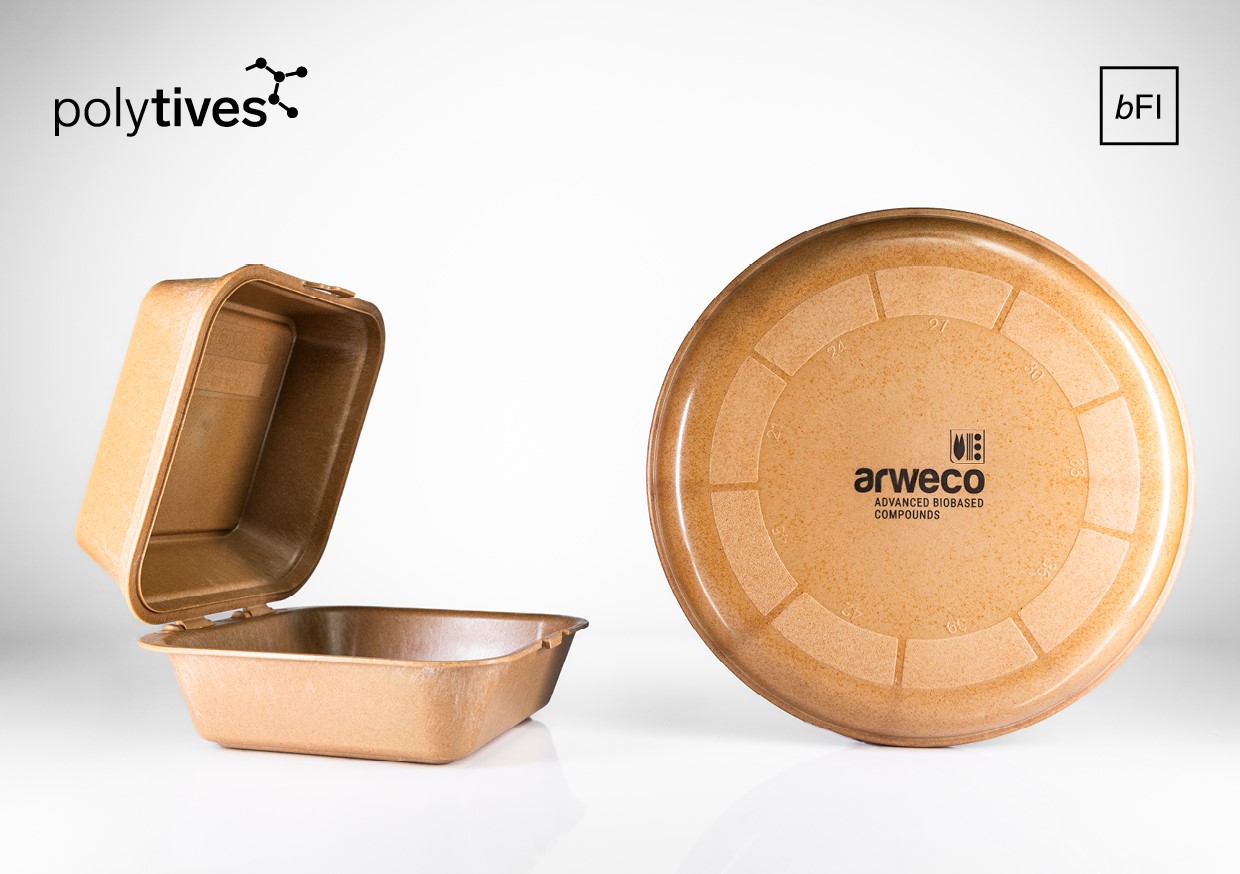
In the world of the plastics processing industry, innovative ideas and sustainability in product design are emerging as a guarantee for long-term economic success. We recently met this dual requirement in collaboration with Holzmühle Westerkamp: our flow improver bFI A 3745 was used as a processing aid to optimise the production of fast-food products under the Arweco brand made from PLA, natural fibres, oat husks and other renewable raw materials. The result is a fully organic product which, on the production side, is characterised above all by excellent handling during processing in the hot runner. Of course, this is not the only advantage of this innovative combination of materials.

Our polymer additives are ideal for bio-based polymer composites, as they counteract high processing temperatures, which often lead to material damage and consequently to rejects in the process. Anyone processing PHA or similar materials, for example, may find a new technological approach to previously uninteresting materials. We also recently reported on the potential and challenges of handling PHAs in our blog post.

The temperature-reducing use also has an impact on the energy costs incurred. Savings here lead to more cost-efficient production and, in terms of sustainability, also to a corresponding reduction in the CO2 footprint. This circumstance also helps in the endeavours to become generally more committed to and fit for a circular economic system and to become more resilient in terms of raw material procurement and supply chains.

Conclusion: Better product quality and a more balanced environmental footprint – that sounds like optimisation through bio-based polymer composites. If you are interested in an environmentally friendly addition to any production process, please get in touch with us, because some obstacles are overthrown faster than you can imagine.

Replacing virgin material with recycled material: It’s not that simple

Helfende Hände für alle Unternehmensbereiche: Studentische Unterstützung für Polytives.

How the use of recycled goods can be facilitated. An overview of challenges and opportunities.

The use of recycled materials is an issue for manufacturers of a wide range of products, and not just in the context of the need to reduce CO2 emissions. Replacing virgin material with recycled material wherever possible and, above all, wherever it makes sense, is the declared aim, which is also being pursued by an increasing number of processors due to the standards and specifications that have been set. Unfortunately, it is not as simple as it may sound to the layman. Manufacturers of plastic goods face various challenges, which we would like to briefly discuss here. And also, what solutions might look like.


Quality and consistency

Virgin materials do not have these problems, but unfortunately recycled materials do. They come from different sources and have undergone different processing methods. This can lead to difficulties in the manufacture of consistent products and is critical for the quality assurance of producers.


Contamination and impurities

Returned materials may contain impurities that have not been completely removed during the collection and recycling process. These impurities can affect the mechanical properties of plastic products and make processing more difficult.


Material properties and availability

The properties of recycled materials can sometimes differ greatly from those of virgin materials. This in turn can have an impact on the mechanical, thermal and chemical properties of the plastic products and affect their performance. In addition, the procurement of recycled materials can be relatively expensive due to the collection, sorting and processing required and, depending on the case, the availability of high-quality materials may be unclear.

And yet, in addition to these challenges, there are also clear opportunities. Replacing virgin material with recycled material also means several advantages, which can be seen in the increased demand, among other things.


Resource efficiency, waste prevention and circular economy

By using recycled materials, companies can reduce the need for new virgin resources and thus contribute to the conservation of natural resources. The use of recycled materials supports the idea of the circular economy by reducing waste and integrating reusable materials into the production process.


Cost savings and environmental benefits

In some cases, recycled materials can be more cost-effective overall than virgin materials, especially if they are locally available and the cost of sourcing and processing is lower. The use of recycled materials can lead to a reduction in environmental impact, as less energy and resources are required to produce new materials. At the same time, the amount of plastic waste can be reduced as it is given a second life.


Customer requirements and image

Many companies value sustainable and environmentally friendly products. The use of recycled materials can therefore help to increase customer satisfaction and improve a company’s image. Companies can respond to demand by offering recycled materials and not miss out on the trend towards greater sustainability.

Overall, the use of recycled materials in the plastics sector offers several advantages that consider both ecological and economic aspects and can contribute to the creation of a more sustainable and environmentally friendly industry.


How to overcome these hurdles?

There are various starting points for overcoming the challenges described above. On the one hand, it is worth analysing your own raw materials portfolio as well as the internal possibilities for reusing production waste and the like. This is often already standard practice in most companies today, as it achieves an immediate economic effect.

Furthermore, there is a positive effect if several materials are qualified for a part to be manufactured in order to protect against the sometimes poor availability, as far as this is possible. Of course, customer requirements always play a decisive role here. However, they are naturally also interested in maintaining delivery capability. This can mean, for example, making an ABS product fit for use with an rPET.

In addition, additives and processing aids can be a game changer, such as the flow-improvers from Polytives. These also make it possible to replace ABS with rPET for rather thin-walled or more complex parts, as described above, to name just one example. Inhomogeneous qualities of recycled materials can be matched or plastics that are difficult to process because they are too tough can be made processable. This removes a major obstacle to the goal of replacing virgin material with recycled material.

Get in touch with us if you would like to exchange ideas and give it a try, we would be happy to help!


Bio-based, biocompatible, biodegradable: PHAs as a sustainable alternative

Helfende Hände für alle Unternehmensbereiche: Studentische Unterstützung für Polytives.

To open more and more polymer systems based on Polytives’ platform technology, development, trials and sometimes adaptations at molecular level are required. Polytives would like to take these steps, especially for sustainable polymers, to offer an answer to the constantly growing demand. Polymer additives are also a game changer when it comes to processing (previously) unusual materials.


So-called PHAs and what they are all about

The group of polyhydroxyalkanoates, known as PHAs for short, are not yet particularly widespread and are therefore not necessarily the best-known group of polymers. They are sustainable biopolyesters that can be obtained naturally – for example from bacteria. The fact that they can be processed thermoplastically makes them highly interesting for plastics processors who are looking for sustainable alternatives to meet customer needs.


What is the advantage for processors?

To be able to offer a sustainable alternative for certain applications that is also permanently available in good quality, it is worth taking a look at the area of so-called biopolymers. As already described, PHAs are a group of materials that are attracting more and more interest. Because they are biobased, biodegradable and biocompatible, they combine a whole range of added values in terms of sustainable alternatives.


Why are PHAs not yet in widespread use?

Although polyhydroxyalkanoates have thermoplastic properties, the processing windows for users have so far been so narrow that it is unfortunately difficult to talk about simple implementation in existing processes. This is now set to change.

There is only a temperature difference of around 25°C between the melting point and the first signs of decomposition. This, coupled with the brittleness that occurs in the process even before decomposition, is currently usually a knock-out criterion when selecting materials. The shearing during processing and its additional negative effect on the material do the rest. But what could a solution look like to make sustainable materials more usable for plastics processors?

With the help of the Thüringer Institut für Textil- und Kunststoff-Forschung e.V., several PHA types are to be optimized with the available and possibly adapted bFI additives from Polytives. Their effect in the polymer matrix will be closely monitored and documented so that important conclusions can be drawn for the best possible process control. Important factors here include the processing conditions in injection molding, especially the temperatures and injection pressures, but also the subsequent mechanical properties of the resulting products. And, for example, how biodegradability can be classified.

If you would like to find out more about this topic, please contact us!